Most people who start in home care picture the practical side: helping someone get dressed, making a meal, keeping them company. That picture is accurate. What surprises new caregivers — in a good way, more often than not — is how much more there is to it than the tasks.
Working with someone who has dementia teaches you things about people that you can’t get from a training manual. You learn to read a room differently. You figure out what actually helps someone feel calm, what makes them laugh, what the shape of a good afternoon looks like for this particular person. It’s detail-oriented work, and for the right people, that’s exactly what makes it satisfying.
The learning curve is real, and it’s worth being honest about that. Some moments are straightforward. Others — like when a client is upset and the usual reassurances aren’t landing — ask more of you. But caregivers who work through those moments consistently say the same thing: it changed how they see themselves, and it changed what they thought they were capable of.
This article can help you understand what dementia care at home actually involves, what experienced caregivers do differently, and whether this might be the kind of work you’d be good at.
Why Dementia Care Isn’t What Most People Picture
Alzheimer’s disease and other forms of dementia affect the brain in ways that go beyond thinking and memory. People living with the disease often can’t hold onto the present the way most of us do. Memory loss doesn’t move in a straight line. A familiar face can become unfamiliar. A room someone has lived in for forty years can feel, on a hard afternoon, like somewhere they’ve never been. Confusion sets in not just around facts, but around feelings — a person may not be able to say what’s wrong, only that something isn’t right.
New caregivers tend to respond by correcting. “No, that was a long time ago.” Or redirecting: “Let’s focus on lunch.” Or reassuring: “You’re safe, everything’s fine.” These instincts aren’t wrong, and sometimes they help. But often they don’t, because the person isn’t asking a factual question. They’re feeling something — lost, scared, unsettled — and a factual answer doesn’t reach that.
What takes time to learn is that the goal isn’t to bring someone back to the present. It’s to meet them where they are.
How Experienced Caregivers Actually Respond to Your Loved One
Here’s a situation that comes up regularly: a client asks to go home, even though she’s sitting in her own living room. A new caregiver might try to explain — point around the room, show photos, gently correct. An experienced caregiver asks: “What do you love most about your house?” or “Tell me about your kitchen.”
The difference is that the second response acknowledges what’s underneath the question. She’s not confused about geography. She wants something familiar, something safe. Responding to that feeling tends to calm that moment of anxiety far more effectively than any correction would. These are the kinds of tips that feel small in training but make a real difference in the room.
Research from the National Institute on Aging shows that communication strategies focused on emotional validation tend to reduce distress for people with dementia and make daily care go more smoothly for caregivers too. Redirection and validation aren’t advanced clinical techniques. They’re practical shifts in how you listen and respond — and they’re learnable.
Why Dementia Care Is a Good Fit for Career Changers
Dementia home care doesn’t require a health care background or prior experience working with medical professionals. What it requires is patience, flexibility, and the ability to follow someone else’s lead — especially when that person can’t always tell you what they need.
Many people who do this work well came to it sideways. They cared for a parent, a neighbor, a friend, and found they were good at it. Others had no caregiving experience at all and discovered, once they started, that it suited them in ways they hadn’t anticipated. What they share is less about prior training and more about how they handle uncertainty — whether they can stay calm when a situation shifts, whether they can set aside the urge to fix and just be present instead.
That’s not a personality type. It’s a skill, and most agencies will train you on the specifics: how to handle behavior changes, how to create a safe environment, how to respond when someone becomes agitated or unable to recognize a familiar face. Caregivers who bring flexibility and genuine attention to the work tend to build real connections with their clients and other family members. According to the Family Caregiver Alliance, those relationships are one of the most consistently reported sources of meaning in long-term caregiving work.
There’s also a practical side to consider. Home care is stable, community-based work. Pay varies by agency and location, but demand for qualified caregivers continues to grow as the population ages — which means opportunities are expanding, not shrinking. For people looking to build a future in health care or human services, starting in home care is a legitimate path with room to adjust and grow.
What a Typical Day in Dementia Home Care Looks Like
How Is Dementia Home Care Different from Regular Home Care?
The daily tasks in dementia care overlap significantly with general home care — personal care, meal preparation, light housekeeping, companionship, medication reminders. The difference is in how those tasks get done, and how much the approach matters.
Routine is important. A predictable schedule — meals at consistent times, familiar activities in a familiar order — helps reduce stress for someone whose memory isn’t reliable. So does the physical environment: familiar objects in familiar places, minimal clutter, good lighting. Small preferences matter more than they might seem: which mug a client uses, whether she likes background noise, what time of day she’s most alert. Learning those things is part of the job.
Practical challenges come up too — eating difficulties, sleep disruption, moments of confusion or distress that need a steady response. A good caregiver knows when to handle something directly and when to discuss it with family members or seek guidance from a supervisor. Agencies that specialize in dementia care offer training programs, ongoing supervision, and access to resources so caregivers aren’t navigating those situations alone. When a client needs a higher level of medical care — a doctor’s evaluation, a hospital visit, or a specialist — it’s the caregiver’s role to recognize those signs and communicate them to the right people.
In Carlsbad, CA, families who turn to home care services for a loved one with dementia are often looking for one thing above everything else: consistency. The same caregiver, the same routine, the same face at the door. Family members find it easier to step back when they trust that someone steady is there. That kind of continuity is something an attentive caregiver provides in a way that can’t be replicated by anything else.
Long term care at home — especially for someone living with a progressive disease — asks a lot of caregivers over time. Agencies that invest in their staff provide information, encourage open communication, and prepare caregivers for what changes as a client’s condition evolves.
The Connection Caregivers Don’t Expect
Ask caregivers who’ve worked in dementia care what surprised them most, and a lot of them say the same thing: how much the connection mattered, even when it wasn’t remembered.
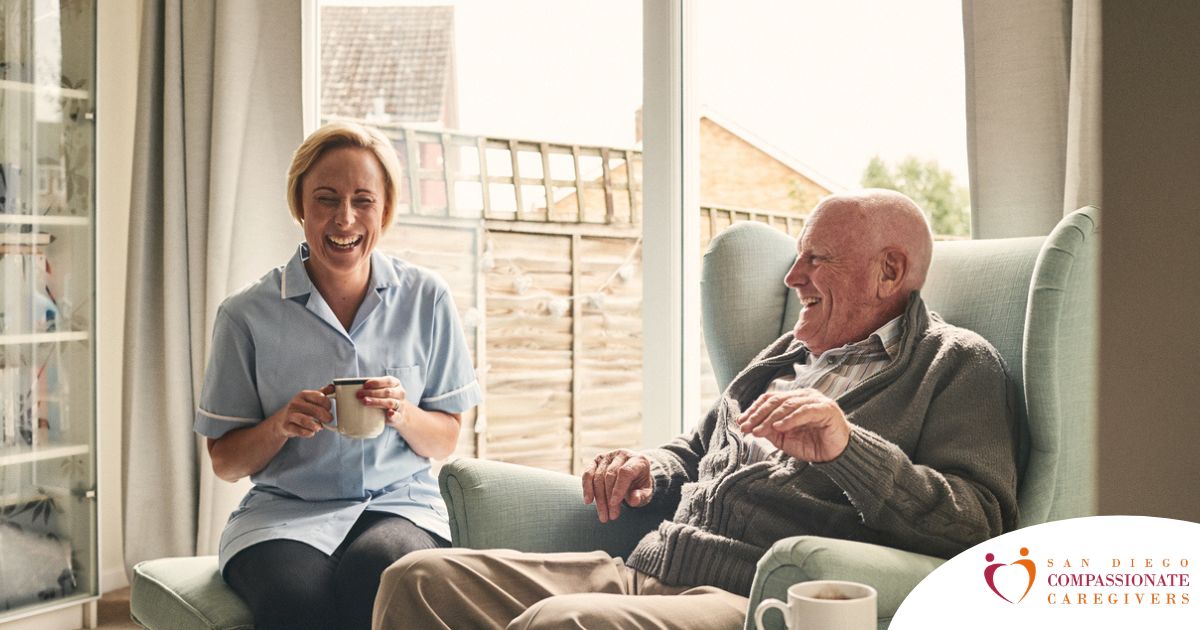
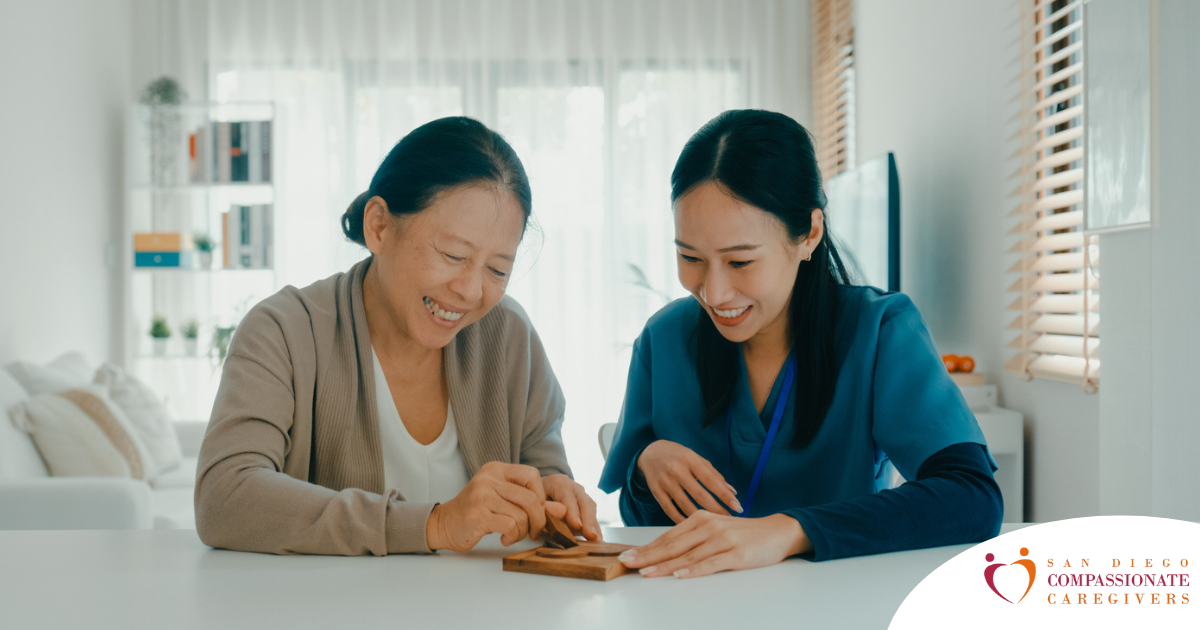
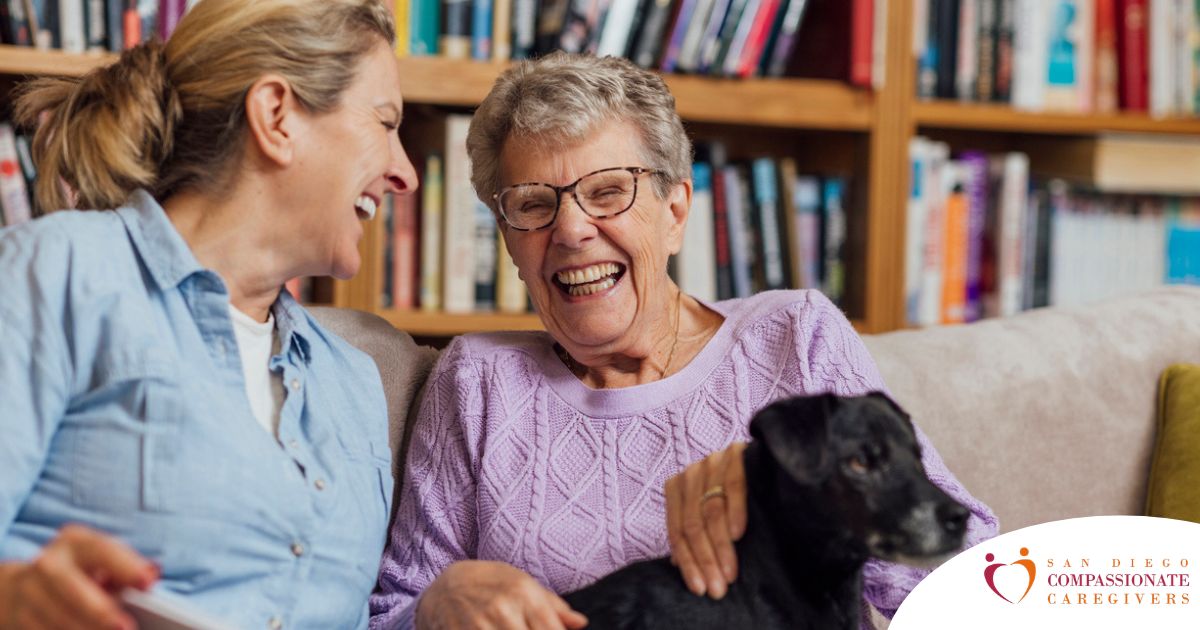
You figure out what makes someone laugh. You learn which songs take her somewhere good, which topics light her up, what helps her feel settled at the end of a hard day. She may forget your name. She may not know, tomorrow, that you were there today. But the moment was real, and she felt it. Life with dementia includes hard days — but it also includes moments of genuine warmth, and a good caregiver helps create those.
For people who come into this work uncertain about whether they’ll be good at it, that’s often what makes them stay — not the tasks, not the schedule, but the realization that they’re genuinely helping someone have a better day. According to the Alzheimer’s Association, an estimated 6.9 million Americans age 65 and older are living with Alzheimer’s dementia — most of them at home, most of them relying on caregivers who showed up without a degree and figured it out as they went.
Join Our Home Care Team in Carlsbad, CA
San Diego Compassionate Caregivers provides in-home care and assistance for older adults and people living with dementia across Carlsbad, CA and San Diego County, Chula Vista, El Cajon and San Diego. We train our caregivers to handle the moments that don’t come with easy answers — and we provide ongoing support so you’re not working through it alone.
Our services include Alzheimer’s and Dementia Care, Companionship Care, Hospice Care, Personal Care, Post-Operative Care, Respite Care, Specialty Care, Spinal Cord Injury Care all provided in clients’ own homes. We’re part of the Carlsbad, CA community, and we’re always looking for people who want to do meaningful work alongside a team that takes care of its own. No prior experience is required to apply. If this sounds like work you’d be good at, visit our career page or contact us directly — we’d be glad to talk.